The post Link-building and outreach email templates. appeared first on Yellow Pages.
]]>Backlinks are currently extremely popular amongst search engine optimisation (SEO) experts and strategists for online marketing, thanks to their value in improving a website’s ranking in search engines and their potential for building new audiences.
Not sure what they are, or how they relate to outreach – or what outreach is? Read on.
What are backlinks and why do they matter?
A backlink is a link from another website that leads to your business’ website.
As you’d expect, backlinks are a great way to drive traffic to your site and attract potential new customers. But the marketing benefits go further than that.
This is because backlinks are a major factor that Google uses to determine a page’s search position. Having a strong backlink profile – links from a variety of trusted sites back to your site – can significantly impact your rankings.
RELATED: What is backlinking and why does your site need it?

How to get backlinks.
Aside from simply hoping the quality of your products and services will organically earn backlinks to your website, the major way to create backlinks is with outreach. Outreach is an email marketing tool where you get in touch with bloggers or websites to ask for backlinks.
Many big businesses dedicate a portion of their digital marketing budget to outreach to help build their backlink profile. While you probably don’t have the luxury of a big budget, you can still conduct outreach on your own.
Keep in mind, though, that not all backlinks are created equal. Ideally, you want to be getting links back to your site from trusted and reputable sites.
One way to evaluate this is by looking at a site’s ‘domain authority’ or ‘domain score’ This is a score developed by Moz that predicts how likely a website is to rank on search engine result pages. The higher a website’s domain authority, the more likely it is to be trusted by Google.
You can find out a website’s domain authority by using Moz’s free domain SEO analysis tool:
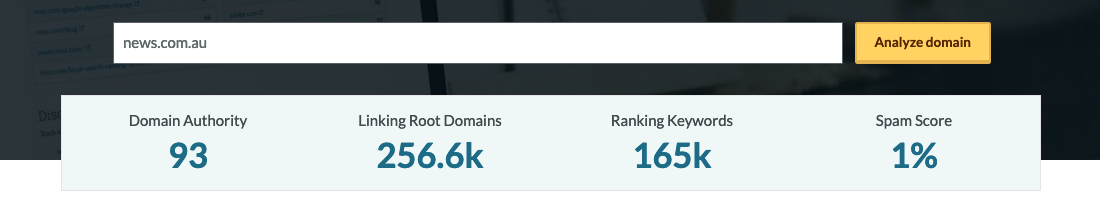
The closer to 100 a website’s score is, the more valuable backlinks from that site would be in terms of SEO.
When you’re looking for potential people to approach about links, try to find those that are not only relevant to your brand in some way, but also have a solid domain authority and a reasonable social following.
A Domain Authority score ranges from one to 100, with higher scores corresponding to a greater ability to rank.
Backlinks have become part of many marketing strategies as they are also good for SEO. This is because when search engines ‘see’ that your site has been listed by someone else, it serves as something of a vote of confidence and can help you move up the rankings.
The source is vital as well. If a hugely popular website with a high ranking of its own links to you, it is worth more than it would from a relatively unknown website.
RELATED: 11 free SEO tools to simplify your marketing strategy.
To find out if a website carries enough weight to be useful by backlinking to you, you can check its ‘domain authority’. The closer to 100 their score is, the more valuable their backlinks are in terms of SEO.
Aside from simply hoping your excellent products and services will earn backlinks on their own merit, the major way to create backlinks is with outreach. Outreach is an email marketing tool where you get in touch with certain bloggers or websites to ask for backlinks.
In your email, you’ll need to be polite, honest, and upfront about your reasons for contacting them. Below are a few email marketing templates to get you started.

Link-building for SEO: Cold email templates.
So you want to give outreach a try. That’s great! But what should you say? How do you contact someone without seeming spammy?
As a general rule, aim to contact people or businesses that would have a genuine interest in your products or services, or could benefit from a partnership with your business.
For example, if you’re a nutritionist, you could reach out to a local media outlet about linking to your website in an article about a health and wellness festival in your area. Or you could partner with a local gym to offer a 10% first-time discount to their members in exchange for a link back from the gym’s website.
There are lots of ways to propose backlinks and it’s all about thinking creatively. We’ve put together some cold email outreach templates to help you get started.
Email template: To ask for a backlink in exchange for a blog.
Hi [name],
My name is [your name], and I work for a company called [company name]. We [explain your brand or service and what makes you special].
I recently came across your [blog/website], and I’m getting in touch because I had a few ideas for articles that I think your readers would love. I’d be happy to send a blog your way, either on a topic of your choosing or perhaps [suggest a good topic that would fit well with their brand and offer an opportunity to link to your site].
Alternatively, I’d love to discuss any other ideas that you have, even in terms of partnering up on a piece of content you’re already working on.
Let me know if this is something you might be interested in and we’ll get the ball rolling!
Many thanks,
[your name]
Email template: To ask for a backlink via a review.
Hi [influencer name],
My name is [your name], and I work for [company name]. We [explain your brand or service and what makes you special].
I was recently browsing through blogs in [your industry or field] and came across yours. I particularly loved the article on [name specific article] because [give specific, realistic and fun reason for why you genuinely liked it, expand as much as you can to make this personal].
I’m sure you get plenty of review requests, but I’d love to add one to the mix. I’d like to [offer you a free trial/send you a free product]. [If it’s not immediately obvious, explain more about what the product or service is and what makes it stand out here].
I think it would be right up your alley and we understand that if you don’t like it, it won’t get a positive review (although we’re pretty confident you’ll love it!). To keep our marketing team happy, we are looking for a backlink included somewhere in the review as part of the agreement as well.
Please let me know if you’d like to give it a try, or if you have any questions for me at all.
Many thanks,
[Your name]
Email template: To ask for a backlink directly.
Hi there [name],
My name is [your name], and I work for [company name]. We [explain your brand or service and what makes you special].
I was recently browsing through blogs in [your industry or field] and came across yours. I particularly loved the article on [name specific article] because [give specific, realistic and fun reason for why you genuinely liked it, expand as much as you can to make this personal].
Now I’ll cut to the chase as I’m sure you get plenty of inquiries, but I was wondering if you are open to working with brands? At the moment we’re working on creating a few great backlinks to our site, and I’m only getting in touch with a handful of bloggers that I think would be a good fit for the brand.
Please let me know if this is something you’d be interested in at all and we can take it from there!
Many thanks,
[Your name]
What’s next in your digital marketing plan?
While backlinks are essential to boosting your SEO, there are also a number of other important factors to consider, such as fresh and relevant content, a keyword strategy and many more.
If you need a hand with linkbuilding SEO or your digital marketing strategy, Yellow Pages can help. Our team of dedicated experts have years of experience developing and refining SEO strategies for small businesses. Find out more here.
The post Link-building and outreach email templates. appeared first on Yellow Pages.
]]>The post What is backlinking and why does your site need it? appeared first on Yellow Pages.
]]>So what exactly is backlinking and why does it matter? We dive into all the details below.
First things first: what is backlinking in SEO?
The most simple backlink definition is a hyperlink from another website or blog back to your site.
While there are plenty of different types of backlinks, the most common way to backlink is through clickable text links in the content of a web page. These usually reference another relevant page or content source, like the backlink example below:
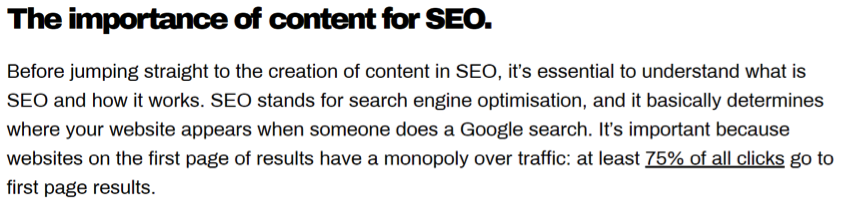
A backlink for SEO can also come in the form of links from directories and social media platforms like Google, Yellow Pages Online and Facebook, or credits in the ‘about the author’ section if you’re contributing to a website.

Why is backlinking so important for SEO?
Now that we’ve covered the what of backlinking, it’s time to dig into exactly why it matters from an SEO standpoint.
Here are three reasons why backlinking is so important for your website.
1. It boosts your website’s authority.
Google’s search algorithm is designed to help connect searchers with the most relevant and useful information out there. One of the ways it judges websites is using backlinks. When a website has more links directing back to it on a certain subject, Google starts to see it as a trusted resource — and displays it more highly in relevant searches as a result.
Simply put, backlinking helps boost your website’s authority in Google’s eyes. This in turn pushes your site up in the search engine rankings, and ultimately gets your business in front of more people who are looking for your product or service.
2. It speeds up indexing time.
Stay with us here! Search engine indexing might sound like a mouthful, but it basically refers to how Google sorts all of the information out there on the web.
Google uses bots to crawl websites for information and stores this away in their index. When someone types in a search — say, for ‘martial arts in Sydney’ — Google trawls through their index to quickly match that search with the most relevant pages to answer their question.
But with so much information online, it can take days before Google gets to crawl your website. Even if you post a new blog or make website updates, it won’t show up on Google until the search engine indexes it.
The good news is that when your site has more backlinks, Google sees it as more authoritative and prioritises your website, indexing any new content as quickly as possible. Ultimately, this means searchers come across your content faster than they normally would and you get more visitors to your site.
3. It increases brand awareness and visitors to your site.
Beyond SEO, backlinking is also a valuable way to get more visitors to your site. The more high-quality websites that link back to your business, the higher the chances are that people will see the link, click on it and end up visiting your site. Then it’s all up to your website design (and your stellar product or service) to work its magic.

How do I get backlinks for SEO?
By now, the point has probably hit home: backlinking matters. But how do you get more backlinks to your website for free?
These tips will help you build more links back to your website:
- Run a backlink check. Use a free tool like Ahrefs backlinks checker to see exactly how many sites are linking back to yours. This helps you get a clear idea of where your links and traffic are currently coming from. You can also use Ahrefs to look at competitor websites to see who’s linking back to them, to get inspiration on where they’re getting links.
- Use social media. As we touched on earlier, backlinks can come from a number of sources. Make sure you link back to your website on your Google My Places listing, Facebook account, and business directory listings.
- Link to other websites. The best way to get backlinks? Share the love! Chances are, when you’re backlinking websites in your blog posts, they’ll be more inclined to give you a link back in return.
- Reach out to relevant sites. If you come across any websites that might be interested in linking to your product or service, simply get in touch! You could invite a local influencer to review your product, or ask an online publication to consider your product for a ‘Best of …’ article.
RELATED: SEO boosting backlinks – the what, the why and how to get them for free.
And don’t forget …
Backlinking is just one part of building a solid SEO strategy. You also need to target the right keywords, get the technical stuff sorted and create fresh content on a regular basis.
If it sounds like a lot to manage, don’t panic — the experts at Yellow Pages are here to help! Get in touch with us here to learn how SEO can ensure your website is found by more customers, more often.
The post What is backlinking and why does your site need it? appeared first on Yellow Pages.
]]>